
AI for science: Google.org funding to support ANU-led chemotherapy resistance cancer research
Original article from the ANU Reporter
The Australian National University (ANU) has been selected as a recipient of the Google.org Impact Challenge: AI for Science initiative.
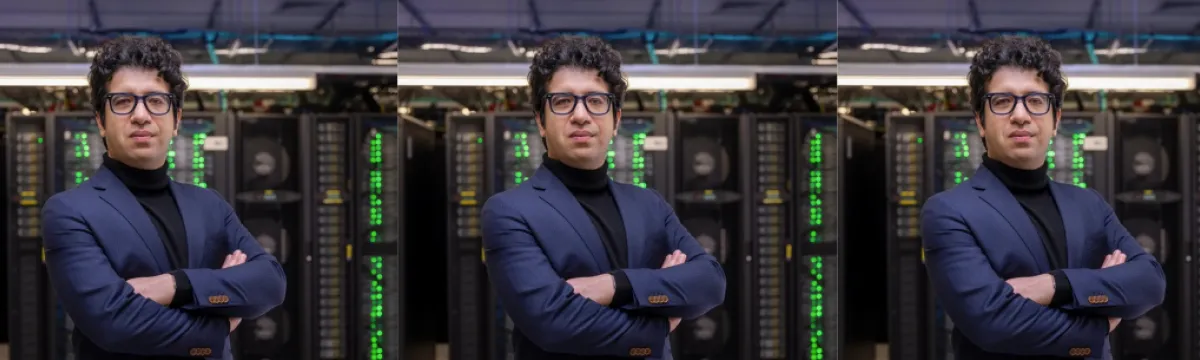
The research collaboration led by Dr Eli Niktab, Principal AI Engineer at the ANU National Centre for Indigenous Genomics (NCIG), will receive US$2.2 million to crack the code of the biology underpinning resistance to chemotherapy drugs.
The team is creating a Cytotoxic Resistance Atlas, an open molecular map of cancer cell lines that have been shown to survive chemotherapy. Using a two-tiered AI engine they can pinpoint the genomic mechanism underpinning cancer resistance in tumour samples for hospitals and pathology labs during routine care.
The project brings together NCIG and The John Curtin School of Medical Research (JCSMR) node of the Joint Mass Spectrometry Facility at ANU; the Resistant Cancer Cell Line collection at the University of Kent; Canberra Hospital; PacBio; the Victorian Cancer Biobank; and the National Computational Infrastructure (NCI) in Canberra.
"AI models are getting better at an unprecedented speed, but biological data to teach AI what causes chemotherapy resistance does not exist, and this is what we are generating, at the resolution needed, for the first time," Dr Niktab said.
"Instead of trying to develop yet another drug, we are using AI to crack the code of the complex biology that underpins drug resistance, ensuring the best possible outcome for each patient and minimising the unnecessary treatment toxicity and suffering inherent in current trial-and-error practice."
ANU is one of 17 organisations selected globally from more than 3,000 applicants across 30 countries.
Genomics has transformed some areas of cancer medicine, yet it still rarely tells an oncologist which conventional chemotherapy will work for an individual patient.
Resistance differs markedly between individuals and tumours as cells that come under attack from a chemo drug rapidly invent new ways to thwart the treatment.
Research has identified how genetic backgrounds can change the outcome of a drug treatment for individuals. However, current tests look at a relatively small number of genes, often return no clear answer, and are not developed or tested in people with diverse genetic backgrounds.
"Existing tests have been developed almost entirely using genomic and clinical data from patients of European ancestry," Dr Niktab said.
This means the people least represented in genomic datasets, including Aboriginal and Torres Strait Islander Australians, are the least served.
It's a gap in the data they were built on, not in the underlying biology of resistance.
“Because our model developed at ANU was designed to learn from the full diversity of human genomes, rather than a single European reference genome, it can be applied across diverse ancestral populations and continuously improve as new genomic data becomes available," Dr Niktab said.
"This makes it readily deployable worldwide, including in historically underserved communities, helping bring precision oncology to every patient, regardless of their ancestry or where they live.
"The architecture is population-agnostic: the same engine, pointed at different data, serves a different population. That is the part that makes this a blueprint rather than a one-country tool."
The models will be trained onshore on Gadi, Australia's national supercomputer at NCI in Canberra. The atlas data, the AI models and the software will be free to use for all researchers.
The long-term aim is to replace trial and error in chemotherapy selection with a molecular understanding of how an individual patient's cancer is likely to fight back, before treatment time is lost.
The recipients of the Google.org Impact Challenge were announced overnight at the Google.org EMEA Impact Summit in Dublin, Ireland.
“We’re at an extraordinary moment for science, as advances in AI open up new possibilities for discovery that were difficult to imagine just a few years ago,” said Leslie Yeh, Director of Scientific Progress, Google.org.
"ANU is bringing together AI and deep scientific expertise in ambitious, creative ways to address some of humanity’s most important questions," Yeh said.
"We’re honoured to support their work as they apply AI to solve the challenge of chemotherapy resistance, push the boundaries of scientific discovery and turn breakthrough ideas into real-world impact."
Dr Eli Niktab. Photo: Jamie Kidston/ANU