
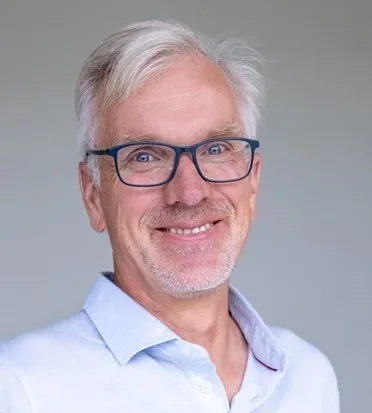
JCSMR Director's Seminar - Prof Andreas Ludwig - Director Institute of Molecular Pharmacology, RWTH Aachen University, Germany Visiting scientist, Victor Chang Cardiac Research Institute
Prof Andreas Ludwig will discuss 'Shedding of surface proteins in response to mechanic cell stimulation'
Event series
Content navigation
Description
Hosted by Professor Elizabeth Gardiner
'Shedding of surface proteins in response to mechanic cell stimulation'
Abstract
Cell–cell communication and interaction are mediated by surface-expressed proteins as well as by soluble factors. The metalloproteinases ADAM10 and ADAM17 regulate these processes by shedding single-pass transmembrane proteins from the cell surface, thereby critically influencing cell differentiation, inflammation, and cancer. Given their central role, both proteases are tightly controlled by multiple mechanisms, including endogenous inhibition, transcriptional regulation, and—most importantly—post-translational activation.
Our recent work has established that ADAM10 and ADAM17 are rapidly activated in response to mechanical forces such as stretch, shear stress, and compression in various cell types. This mechanosensitive response is mediated in part by the ion channel Piezo1.
This talk will primarily focus on endothelial cells, where Piezo1 activation drives ADAM10- and ADAM17-dependent shedding of junctional adhesion molecules and VE-cadherin, resulting in enhanced cell proliferation and accelerated wound closure. Together, these findings identify mechanosensitive activation of ADAM proteases as a previously unrecognized link between mechanical forces and proteolytic control of cell–cell communication in inflammation and tissue repair.
Biography
Andreas Ludwig is a molecular pharmacologist whose work explores how inflammatory signalling is controlled at the interface of biochemistry, mechanics, and cell biology. He studied Biology and earned his PhD in Cell Biology from the University of Kiel at the Research Center Borstel, where his early research focused on chemokines in vascular inflammation. Following postdoctoral training as a Marie Skłodowska-Curie fellow at GlaxoSmithKline in the UK, he became interested in how proteolytic processing of chemokines by ADAM (a disintegrin and metalloprotease) family members regulates inflammatory pathways. The function of ADAMs as well as molecular and pharmacological targeting approaches then became his major subject of research. After academic appointments at the University of Kiel and RWTH Aachen University, he was appointed Professor of Molecular Pharmacology in Aachen in 2010 and later became Institute Director. A current focus of his work is understanding how mechanical forces modulate inflammation and tissue remodelling via ADAM activity. He is presently a guest scientist in the laboratory of Boris Martinac at the Victor Chang Cardiac Research Institute in Sydney, supported by a fellowship from the Heinrich Hertz Foundation.
Location
Finkel Theatre